Why foundations move in Corpus Christi
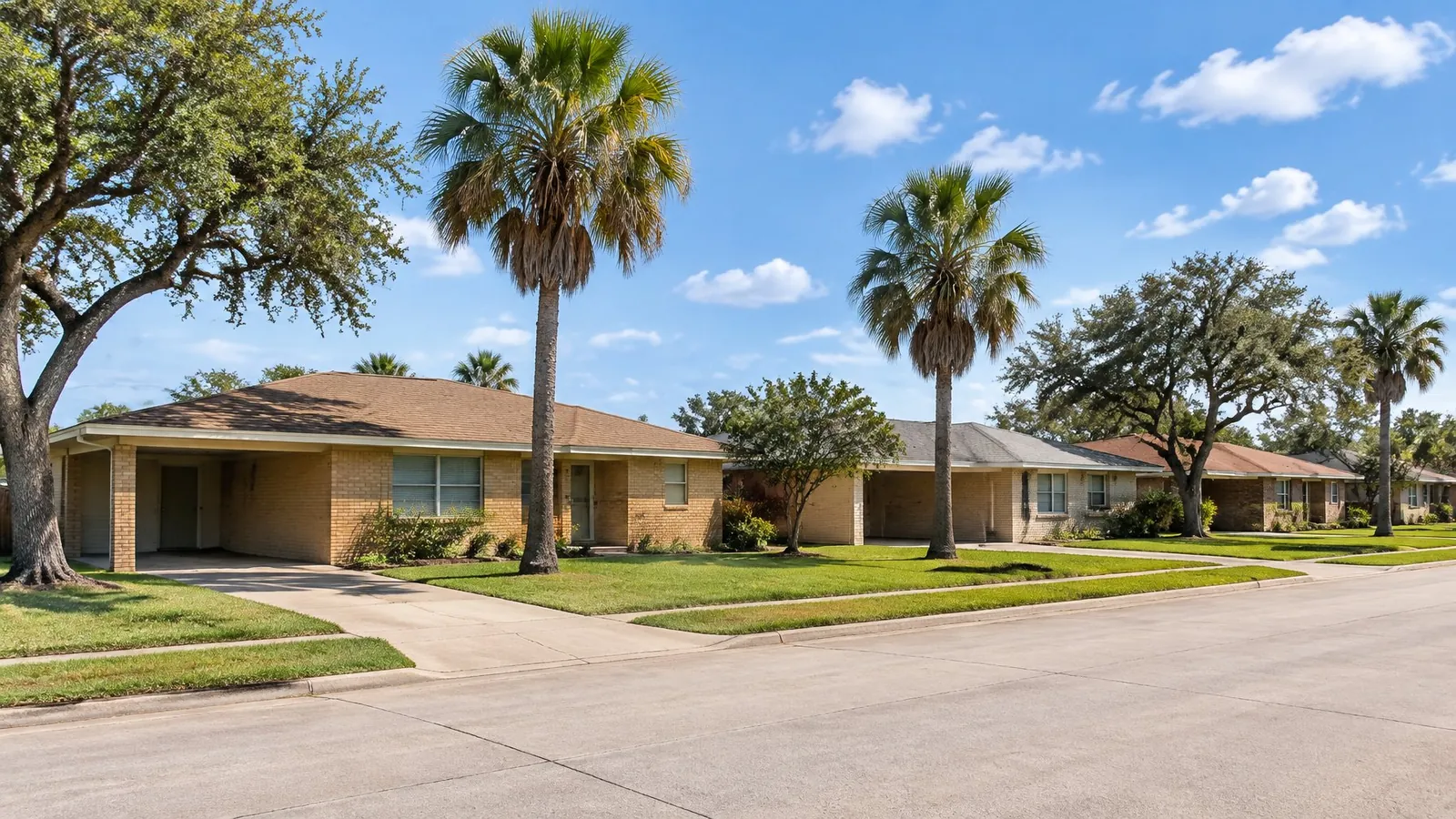
The clay under the mainland
Victoria clay appears in soil survey samples west of Oso Bay, including the Southside and near Calallen. The Natural Resources Conservation Service, the federal agency that maps soils, describes it in its official series description as a very deep clay laid down as river delta and marine mud, part of what geologists call the Beaumont Formation. The agency's reference site for the soil is in Nueces County.
Two lines in that description matter to a homeowner. The clay is very slowly permeable, so water moves through it reluctantly. And when it dries it cracks: openings from under half an inch to about three inches wide that reach five feet deep or more and stay open for ninety days or more of a typical year.
A soil that cracks that deeply is changing volume. Drying makes it contract; wetting makes it expand. The agency rates Victoria clay as very limited for houses without basements and names shrink-swell as the reason.
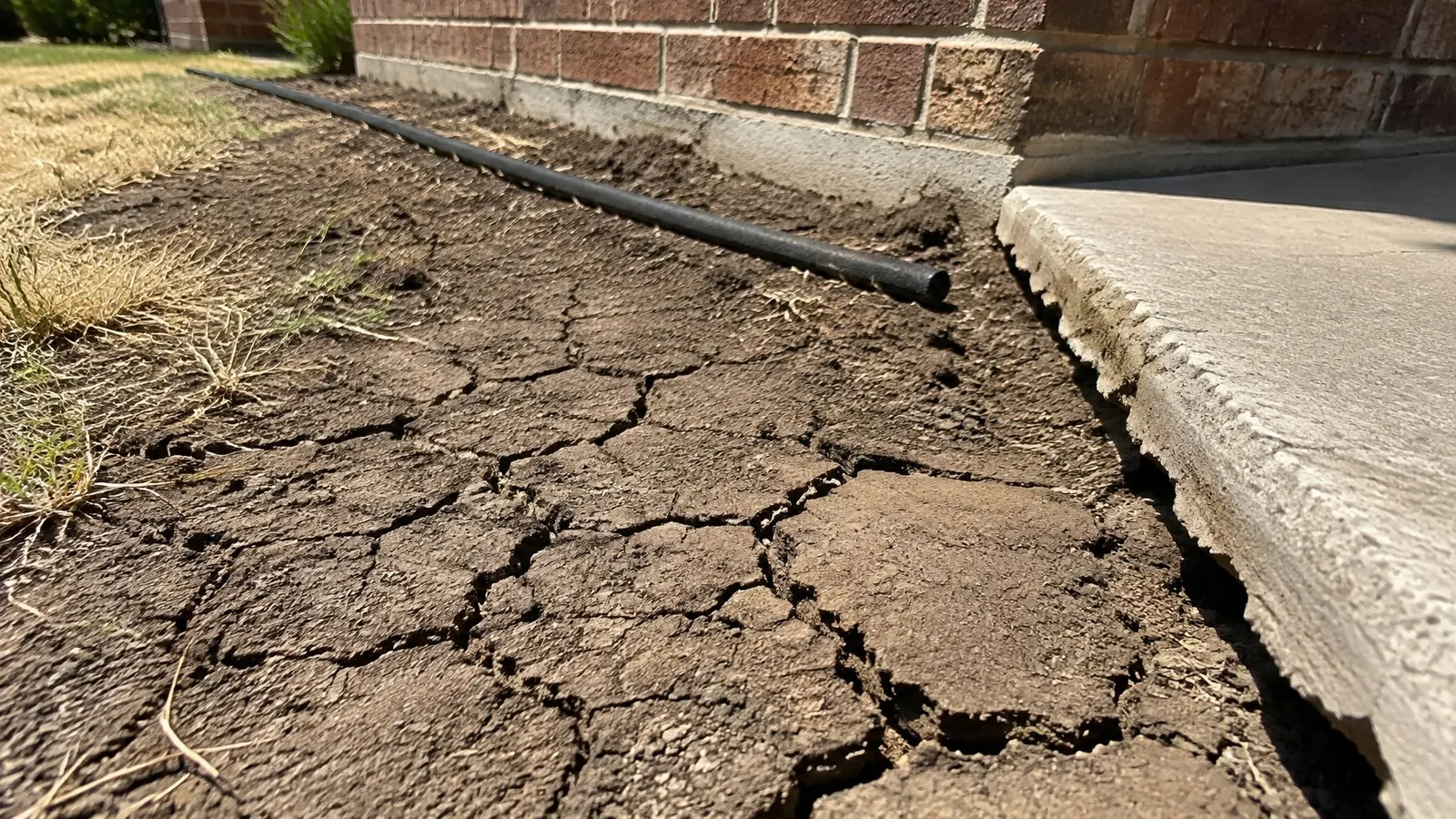
What the weather does to a slab
A concrete slab covers the soil beneath it like a lid. Under the middle of the house the clay stays at a fairly steady moisture. Around the edges it is open to sun, wind, tree roots and rain, so it dries and wets with the seasons.
In a long dry spell the edges of the clay shrink away and the perimeter of the slab loses support. Corners and outside walls sag, and cracks open that are widest at the top. When the rain returns the clay swells and may lift the edges back, though seldom to exactly where they were. Repeat that for years and the slab works loose from level.
The opposite also happens. Water from a leaking drain or a poorly drained bed collects under one part of the slab, the clay there swells, and the floor rises into a low dome. From indoors the two can look alike, which is why measurement comes before repair.
East of Oso Bay
Sand on Flour Bluff, the islands and around Rockport
What the maps show
Galveston and Mustang sands
Flour Bluff, Padre Island, Port Aransas, Aransas Pass and Rockport are mapped as fine sands. They have almost no shrink-swell. The federal ratings flag them for flooding and ponding, and note groundwater near the surface in the Mustang sand.
What it means
Water moves the sand, not the season
Houses on sand move when sand is carried away by runoff or surge, when loose fill compacts, or when saturated ground softens. Drought cracks and seasonal door trouble are much less common than on the mainland.
The town pages for Rockport, Aransas Pass and Flour Bluff and Padre Island go into the sand side in more detail.
In between: loams and mixed ground
Not every mainland lot is pure Victoria clay. The same maps show Orelia fine sandy loam in parts of the Southside and near Calallen, and Calallen sandy clay loam around Portland and Sinton. The agency rates these as somewhat limited for houses: they still shrink and swell, but less. Parts of the older central city are simply mapped as urban land, meaning the natural soil has been built over and is not rated.
Any address can be checked on the Web Soil Survey. It is a guide to what an inspector should expect, not a substitute for looking at the house.
The house plays a part too
- A big tree by the wall pulls moisture out of the clay along that flank.
- Roof water dumped beside the slab keeps one strip wetter than the rest.
- A leak in a drain line under the floor feeds water to the clay day and night.
- An addition built later often stands on a separate foundation that moves at its own pace.
- A pier and beam house depends on timber and shims that age regardless of the soil.
Most of these can be managed. The care guide covers the practical side.
Ready for someone to measure the house?
Dial the number and say what you have noticed. A foundation repair firm covering your part of the Coastal Bend answers, books a visit, and afterward sends its report and price under its own name. That firm is a separate business from this website.
Wall, ceiling or floor shifting while you watch? Gas in the air? Get everybody outdoors, then phone 911 or the gas utility.
House foundations only
Call (361) 217-1905Corpus Christi Foundation Repairs refers callers and repairs nothing itself. Calls may be recorded. Details: referral disclosure.