Doors and windows that stick or won't latch
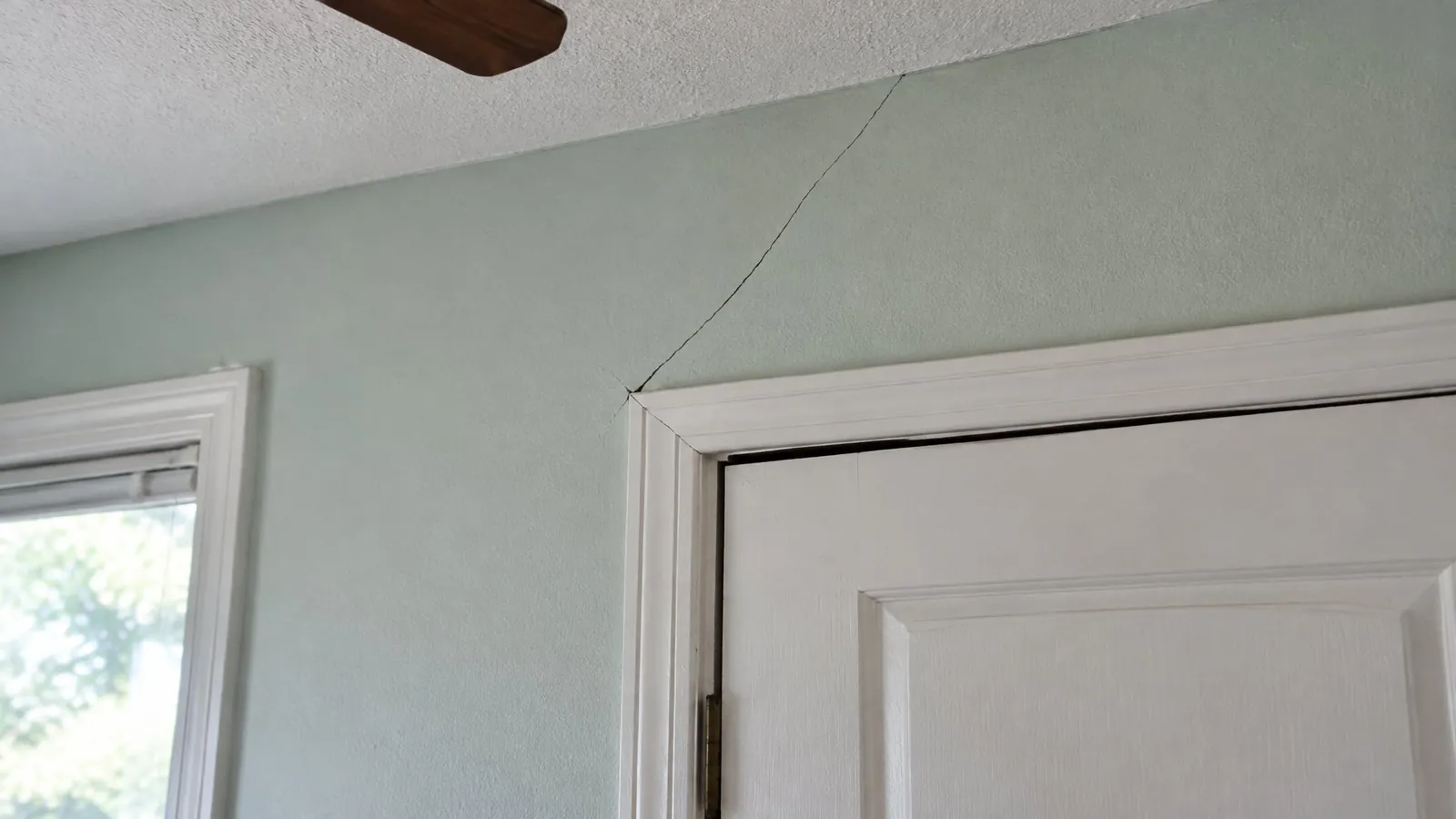
How a racked frame behaves
Look at the gap between the door and its frame. On a square opening the gap is even all the way round. When one side has dropped, the gap turns into a wedge: tight at one top corner, open at the other. The latch bolt meets the strike plate too high or too low, and the door may drift open or shut by itself.
Windows show it differently. A sash binds partway up, a lock no longer meets its keeper, or daylight appears along one side of the frame. Sliding glass doors start to drag on their track.
Humidity, hardware and paint come first
Wooden doors swell in Gulf Coast humidity, and an exterior door that sticks only in the damp months may have nothing wrong beneath it. Hinge screws work loose and the leaf droops at its handle edge. Layers of paint close up a gap that was once fine.
Two quick checks help. Tighten the top hinge and see whether the rub moves. Then look at more than one door: one sticking door can have a hardware cause, while several affected openings give the inspector a broader pattern to investigate.
What gets measured
The estimator shoots a height reading either side of every troublesome doorway, then sets those against readings elsewhere. It will also look for the diagonal crack that tends to appear above the corner of a racked frame, and ask when the trouble started and whether it comes and goes.
Timing is useful evidence. Doors that bind late in a dry summer and ease after the autumn rains fit the way clay soil shrinks and swells. Doors that have been getting slowly worse for years need their history considered alongside the floor readings and other findings.
After a repair
If the cause is found and the house is lifted or steadied, doors often swing better without being touched. Some will still need re-hanging or a strike plate moved, which is carpentry and may or may not be in the foundation proposal.
Shaving the edge so it shuts is a reasonable stopgap, but tell the inspector you did it. A door that has been trimmed twice is part of the history of the house.
Questions about doors and windows
Our entry door jams from July to September only. Foundation?
Possibly, possibly not. Wood swells with humidity, and clay soil shrinks in a dry summer, so both peak at the same time of year. Check whether interior doors near it are also out of square and whether there are new cracks nearby. If so, have it looked at.
A window cracked for no reason. Could the frame have moved?
Glass can crack when its frame is squeezed, though heat stress and old glazing do the same. Look at the wall around the window for cracks at the corners and for gaps between the frame and the brick. Mention the cracked pane when you call.
Three doors on one wall all hanging crooked is reason enough to book a measuring visit.
Call (361) 217-1905Ready for someone to measure the house?
Dial the number and say what you have noticed. A foundation repair firm covering your part of the Coastal Bend answers, books a visit, and afterward sends its report and price under its own name. That firm is a separate business from this website.
Wall, ceiling or floor shifting while you watch? Gas in the air? Get everybody outdoors, then phone 911 or the gas utility.
House foundations only
Call (361) 217-1905Corpus Christi Foundation Repairs refers callers and repairs nothing itself. Calls may be recorded. Details: referral disclosure.