Sloping, sagging or bouncy floors
Two kinds of floor
Concrete slab or wood on piers
Slab on grade
Your flooring lies on the foundation
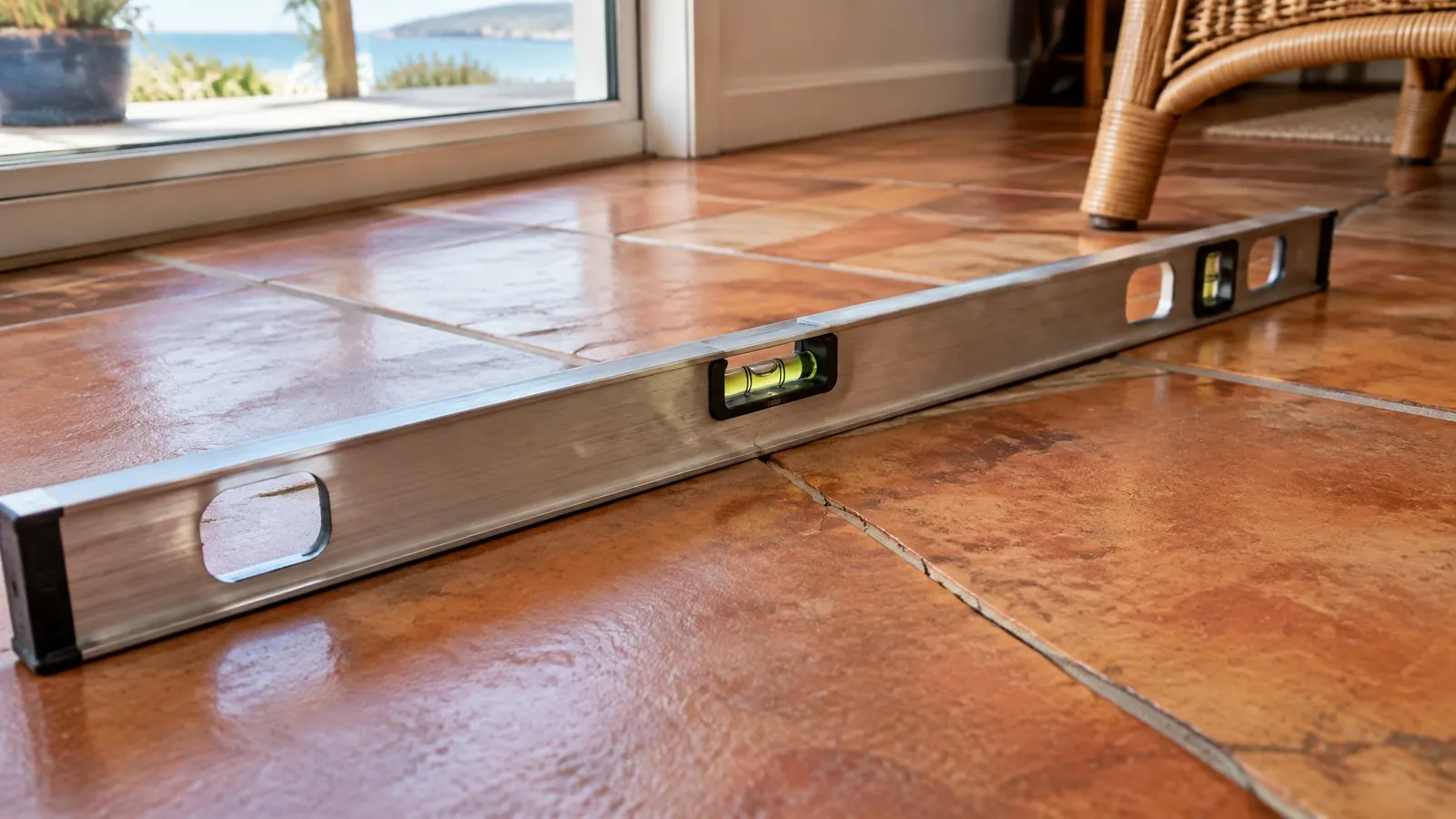
On a slab house the tile or carpet sits on the concrete itself. A slope may reflect movement in the slab, its original finish or the layers above it; measurements help distinguish them. Clues include tiles snapped along one seam, daylight below a baseboard, or a bookcase rocking where it once stood firm.
Pier and beam
Timber holds the floor up
Raised houses have a wooden deck spanning joists, beams and posts. Hollows between posts, or a trampoline feel, usually trace to wood and shims; soil is often a minor player. There is more on this in the pier and beam guide.
Not every slope is movement
No floor is poured or framed perfectly flat. Concrete finishers leave humps and hollows from day one, and an old wood floor settles into its supports over decades. What matters is change. A slope you have only just noticed, new cracks along it, or doorways racking in that same wing all hint at movement still under way.
Water damage also mimics foundation trouble. A leak under a bathroom can rot a subfloor or swell a wood floor into a hump without the foundation moving at all.
How a slope is measured
Estimators carry an electronic altimeter and log floor height at dozens of stations relative to a single datum. Drawn onto a sketch of the rooms, those numbers reveal whether the house tilts in one direction, sags in the middle or is high in one spot.
That shape matters. An edge that has dropped suggests the soil under it has dried and shrunk or was never well compacted. A centre that is high can mean the soil there is wetter than the edges, sometimes because of a leaking drain line. The two call for different fixes, so ask to see the drawing.
What repair might involve
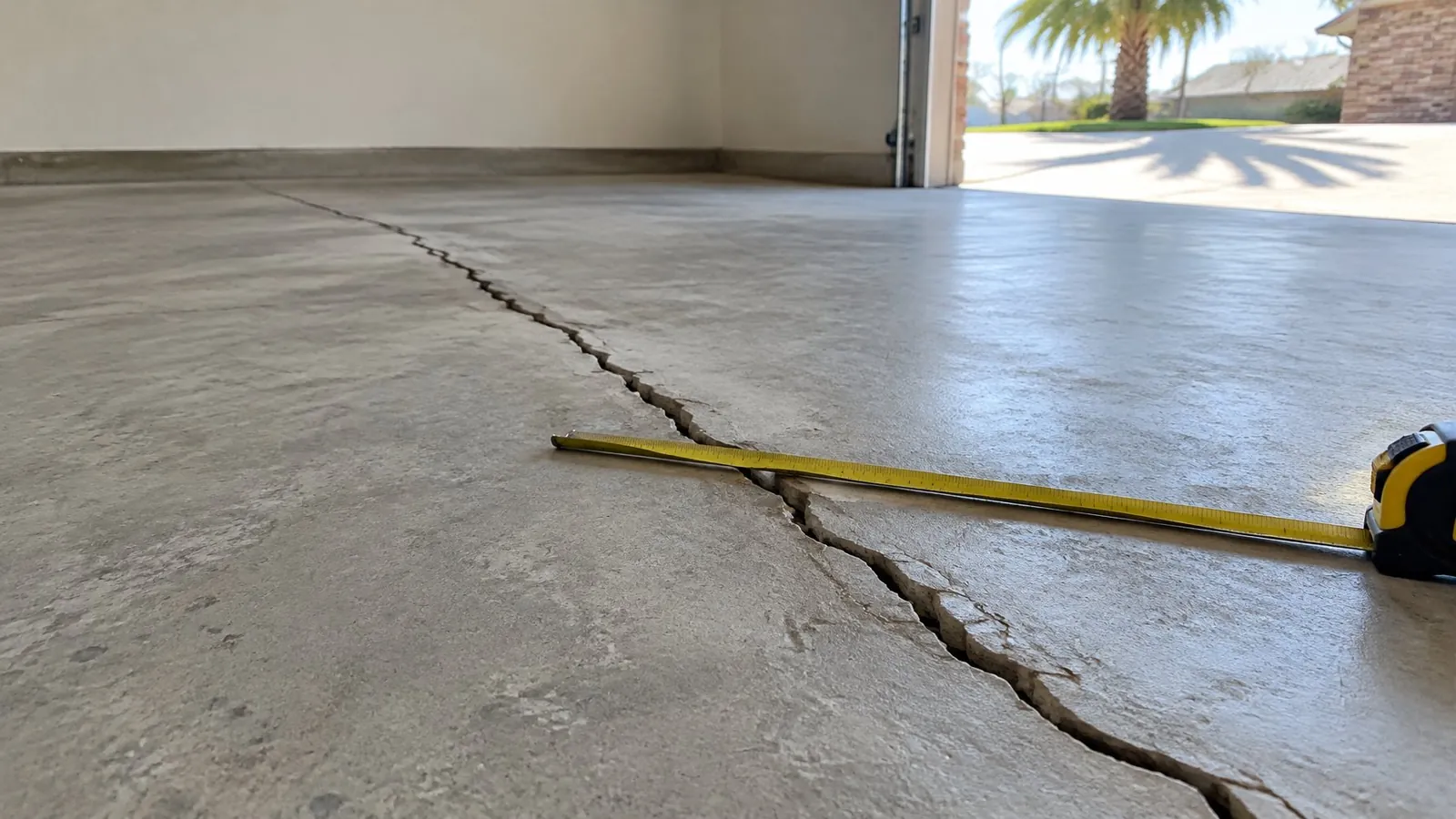
Slab remedies run from piers down the sunken flank to piers below interior partitions when the centre has gone. A modest sunken patch may be floated up on injected grout or foam. Raised floors call for a carpenter's kit: new shims, extra piers, a replaced beam or joists doubled up.
Ask how level the company expects to get the floor. Framing, brick and pipes grow used to a tilt over the years, and forcing it all the way back can crack finishes. A sensible proposal says how much lift is planned and where.
Questions about floors
Is a marble test any use?
A rolling marble or a carpenter's level confirms a pronounced tilt, which is good to know. It will not tell you whether the slope is old or new, or which part of the house moved. Elevation readings across the whole floor do that.
The floor bounces when I walk but looks level. Is that a foundation problem?
On a wood-framed floor, bounce usually comes from joists that span too far, a beam that has lost a support, or timber softened by damp. It is still work a foundation company that handles pier and beam houses takes on, so describe it as bounce when you call.
If your feet can find the tilt, an elevation survey can put numbers on it.
Call (361) 217-1905Ready for someone to measure the house?
Dial the number and say what you have noticed. A foundation repair firm covering your part of the Coastal Bend answers, books a visit, and afterward sends its report and price under its own name. That firm is a separate business from this website.
Wall, ceiling or floor shifting while you watch? Gas in the air? Get everybody outdoors, then phone 911 or the gas utility.
House foundations only
Call (361) 217-1905Corpus Christi Foundation Repairs refers callers and repairs nothing itself. Calls may be recorded. Details: referral disclosure.