Cracks in walls, ceilings and brick
What to look at before you call
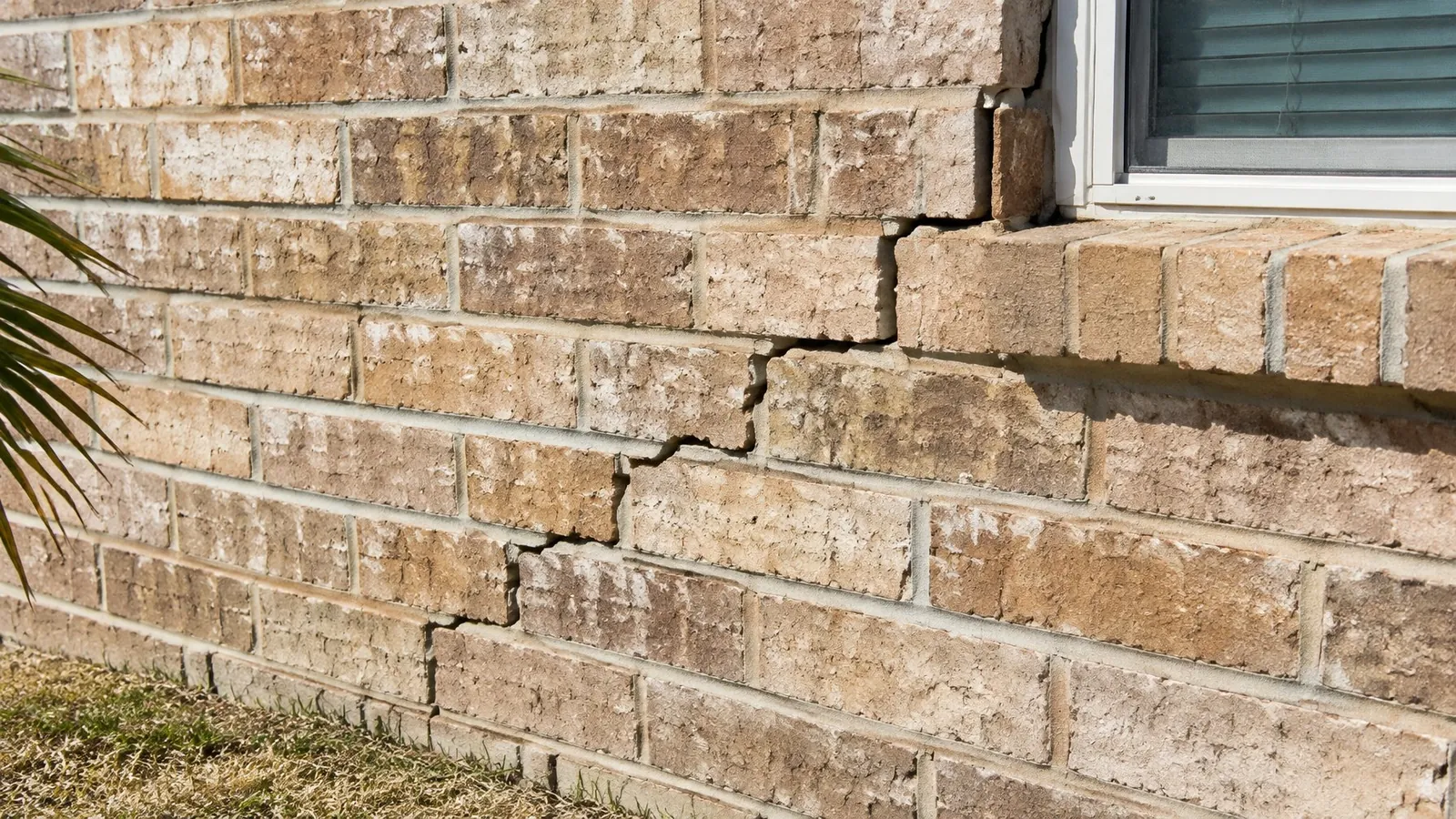
Brick veneer cracks along its weakest path, the mortar, so movement shows up as a staircase climbing away from a corner or a window. Inside, drywall tears on a slant from the top corner of a doorway or window, or the joint between wall and ceiling gapes.
Three things are worth writing down. Does the crack taper, fat at one end and thin at the other? Has it appeared on the inside and the outside of the same wall? Does it change between a dry August and a wet spring? Tell the inspector about that pattern; it can help them decide which measurements and checks are needed.
Cracks that often have another cause
- Thin vertical or horizontal lines along drywall joints, usually tape and joint compound giving way as framing dries.
- A horizontal split over a window or garage door. Rust has fattened the steel lintel there and jacked the brick up.
- Short cracks at the outside corners of a slab, where brick expanding in the heat pushes the corner of the concrete off. An inspector can check whether the corner damage is limited or part of wider movement.
- Hairline cracks in stucco or plaster with no pattern to them.
None of these rules a foundation problem in or out. They are reasons not to assume the worst from one crack.
How a repair firm reads the cracks
The person who comes out should map the cracks instead of judging them one by one. Cracks bunched along the east wall, say, with crooked doors in those very rooms, tell a different story from a single crack on its own.
Expect floor elevation readings in every room, a walk around the outside to look at the brick, the slab edge and the way the yard drains, and questions about plumbing leaks and big trees. On most of the mainland the soil is a heavy clay that the Natural Resources Conservation Service describes as cracking open in dry spells, which is why the season matters to what they find.
What repair might involve
If the readings show one part of the foundation has dropped, expect a bid for piers beneath that stretch, to arrest it and raise it if the structure allows. Cracks often narrow when a section is raised, but they rarely vanish. Repointing brick and patching drywall come afterward and are usually priced separately, so ask whether the proposal includes them.
If the readings show little movement, the answer may be to seal the crack, fix a drainage or watering problem and measure again in a few months. The methods guide explains each kind of pier in plain words.
Questions about wall cracks
How wide does a crack have to be before it matters?
Width alone is a poor guide. A narrow crack that keeps growing matters more than a wider one that has not changed in years. Mark the ends of the crack in pencil with the date, photograph it next to a coin, then revisit after six or eight weeks. Bring those notes to the inspection.
Should I fill the cracks first?
It is better to leave them until someone has looked. Fresh caulk and paint hide the pattern an inspector reads, and a filled crack that reopens tells you less than an untouched one.
Cracks turning up in several rooms, or one that lengthens month by month? Time to get floor readings taken.
Call (361) 217-1905Ready for someone to measure the house?
Dial the number and say what you have noticed. A foundation repair firm covering your part of the Coastal Bend answers, books a visit, and afterward sends its report and price under its own name. That firm is a separate business from this website.
Wall, ceiling or floor shifting while you watch? Gas in the air? Get everybody outdoors, then phone 911 or the gas utility.
House foundations only
Call (361) 217-1905Corpus Christi Foundation Repairs refers callers and repairs nothing itself. Calls may be recorded. Details: referral disclosure.