A porch, steps or chimney pulling away
Why add-ons move by themselves
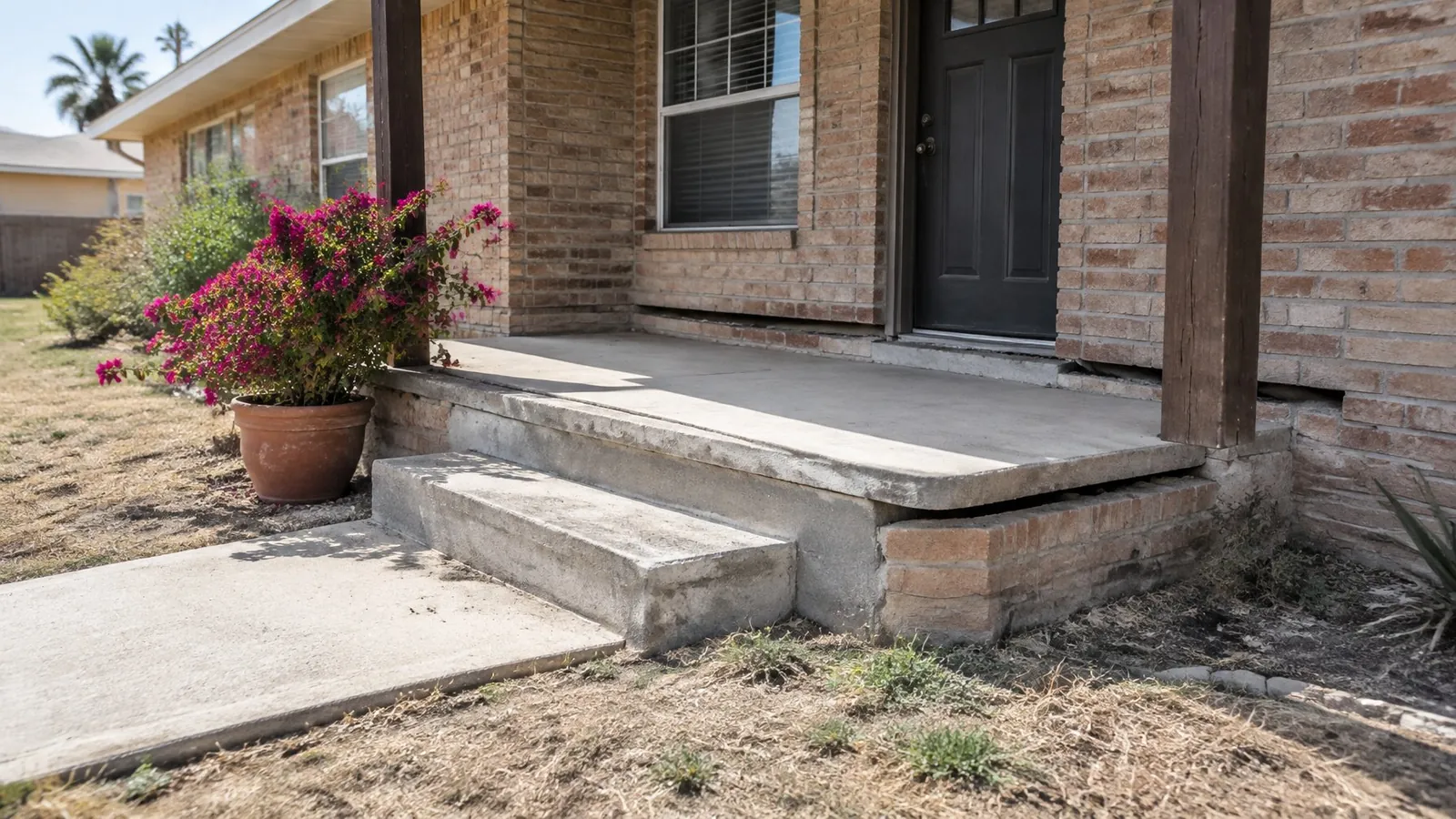
Front stoops, steps, patios and many porches are separate pieces of concrete poured up against the house after the main slab. They sit on shallower footings, or on none, and are not tied to the foundation. When the soil beneath them shrinks, washes out or was loosely filled, they tilt away and a gap opens at the joint.
A masonry chimney is heavy for its footprint and may have its own small footing. If that footing sinks faster than the house, the stack tips outward and a sliver of sky appears where masonry met cladding.
Clues about the cause
- A downspout that empties beside the steps can wash soil from under them.
- Record whether the gap is widest at the top or stays even. Those patterns help an inspector investigate rotation, sliding or movement in the house.
- A hollow sound when you tap the concrete suggests a void beneath it.
- Cracks in the house wall next to the gap, or doors binding indoors on that side, suggest the house itself is involved.
Sorting out which piece moved
Job one is establishing whether house or attachment shifted. Floor elevations indoors show whether the main foundation has dropped along that wall. A probe rod or a small camera can find voids under a stoop. The inspector should also look at where roof water lands and how the ground slopes around the piece.
For a chimney, expect a closer look at how it is tied to the framing. A leaning chimney is one of the few items on this page that can become urgent. If it has moved noticeably in a short time, keep everyone clear of that wall, and ring 911 should it look ready to topple.
Ways it gets fixed
Dropped stoops and patio panels respond well to injection: grout or foam fed through coin-sized ports floats them up to their old height. Heavier pieces, and chimneys, may get their own piers. Sometimes replacing a small set of steps costs less trouble than lifting it.
Once the piece is back in place the joint is sealed so water cannot run down into it. If the inspection shows the house foundation moved too, that repair comes first.
Questions about porches and steps
Does a gap at the porch mean the foundation is failing?
By itself, no. A porch poured separately can drift while the house stays still. It becomes a foundation question when there are matching signs in the house: cracks, doors out of square, or a floor sloping toward that wall.
Is a tube of sealant enough?
Sealant sheds rain from the joint, a worthwhile gain, yet the slab keeps travelling regardless. If the gap keeps growing after you seal it, the caulk will tear and you will know the piece is still on the move.
Porch gap growing, and new cracks inside along that wall as well? Have both looked at together.
Call (361) 217-1905Ready for someone to measure the house?
Dial the number and say what you have noticed. A foundation repair firm covering your part of the Coastal Bend answers, books a visit, and afterward sends its report and price under its own name. That firm is a separate business from this website.
Wall, ceiling or floor shifting while you watch? Gas in the air? Get everybody outdoors, then phone 911 or the gas utility.
House foundations only
Call (361) 217-1905Corpus Christi Foundation Repairs refers callers and repairs nothing itself. Calls may be recorded. Details: referral disclosure.